


Most people say Melissa Webster shouldn’t have made it. She grew up living in cars and bed-and-breakfasts, moving in and out of the care system, before trying to build a life in one of England’s roughest estates. Now she is Chief Operations Officer at Melba Support Services, the pro bono CEO of ADHD Australia, and someone who opens her home to young people others may not take. It all comes back to the chance someone once gave her.
I’ve been here 14 years now. How did I get here? That’s where my ADHD kicked in. I came on one holiday and, on the first night, I was like, I love it! Let’s migrate here! So I did. I literally went back home, did all my stuff, gave up my job and shipped everyone over. I’d just had children, but I decided I was going to go for it. Taking chances has been a theme throughout my life. What I’ve realised is that, long before I took chances on myself, somebody else took a chance on me.
Growing Up in Braunstone, England
My early years were unsettled. Mum and I moved around a lot, living in cars and bed-and-breakfasts, and I moved in and out of care across the UK. With so much disruption, I had very limited access to consistent education.
Mum was living with a lot of things nobody had names for back then. She clearly had a disability and mental health issues, but none of it was diagnosed. She sadly died by suicide when I was very young.

Eventually, I returned to live with my dad in Leicestershire, on a very rough estate called Braunstone—known for crime and drugs and often described as one of the roughest estates in England. Life there was not easy either. Even so, when I look back, I also remember the beautiful friends I made and the people who opened their homes to me. Among all the uncertainty, they created moments of safety when kindness mattered most.
Not long ago, a lady got in touch. At first, I was like, gosh, who are you? She said, “Do you not remember? We used to play together.” When I was a tiny 10-year-old, I lived with her mum during one of my placements.
Then it all came back: her mum had been beautiful to me. She is coming to Australia in late December and, as I call it, I’m going to place her in my house for three days. I’m super excited to see her. Her reaching out brought those memories back and reminded me that an act of care, however small it may seem at the time, can stay with someone for the rest of their life.

Finding Out at Uni
I always wanted to make a difference to people with complex disabilities. I was really passionate about autism. Didn’t know why.
Then at uni my own challenges got picked up. I found out I was ADHD, dyslexic and dyspraxic. Later on, I found out I have a sensory processing disorder too. I actually think I’m a bit autistic too. Not diagnosed, but I think so.
ADHD is my scatty brain. But I’m also super organised, which surprises people. Everything is scheduled and everything’s in lists. That’s what keeps our house running.
That's my quirky me
I don’t take meds. I tried medication years ago and I didn’t like it. I didn’t feel as switched on. I like to actually feel, and I think being able to do multiple, multiple things in my work comes from managing without it.
What works for me is the gym, exercise and lots of time outdoors. My house looks like it’s outside, by the way. Trees everywhere, plants. Honestly, it’s ridiculous. Sleep is a different story. I really struggle with it. I don’t watch TV. It gives me headaches unless it’s a short clip. Instead I read journals and listen to podcasts. Learning about neurodiversity, and ADHD in particular, is my super interest. I’m a bit odd like that. That’s my quirky me.
A Family of a Lot
Today my partner and I share a busy blended family, and we open our home to young people who need additional support. How do I keep it all on track? I probably don’t!
Everyone in the family is neurodivergent in some way, shape or form, so we have a lot of structure: visuals, routines and low-arousal approaches at certain times. I grew up in that world, so it comes naturally to me.
It can be noisy, chaotic and always interesting, but I am proud that we have created a home where people feel safe, valued and accepted for who they are.

Taking the Placements Nobody Else Will
Statistically, someone with my start in life—a person who was out of school for years—was unlikely to complete an education, let alone reach university. Surprisingly, I did. I went on to earn several degrees and master’s qualifications, including an MBA and qualifications in health and disability, and my professional background is in behaviour support.
What I know is this: put the right strategies and support around someone, and you can make their life easier. The difference can be like chalk and cheese. So, I take placements that nobody else will take, to give that person an opportunity. The placements I take are voluntary, not paid.
When I was younger, I did not understand why I took on placements or why I was drawn to this field. Now I do. Somebody once opened their home to me, created safety in the middle of uncertainty and believed in a young person who did not always have reason to believe in herself.
“Somebody gave me that chance. If I can give that back to somebody, it creates an opportunity they just didn’t have.”

For No Money—and Thriving at Melba
A bit over three years ago, I had just started a big role as Chief Operating Officer at Melba Support Services. At Melba, I help bring together operations, people and improvement so we can deliver high-quality support. The support I receive there helps me thrive.
I can bring my whole self to work, including the creativity, energy and different way of thinking that come with being neurodivergent. Our CEO, Hayley Dean, welcomes my innovative thinking, and that trust gives new ideas room to become meaningful change.
Around the same time, a friend sent me the ADHD Australia CEO role. She said, “If anyone’s got the time and can make that difference, you can.” I looked at it and thought, oh, I dunno. My new job was so big. Then a couple of other people knocked on my door and asked if I would be interested. I spoke to the chair, applied and, after a series of interviews, got it.
For no money! People ask me why all the time. The why is because I believe I can make a difference to people’s lives with ADHD. Our volunteers are amazing—lawyers, paediatricians, social workers and families, all giving their time. If it means I use a small percentage of mine to bring that together and meet great people, it is not that hard, right?
I want the ADHD community heard across the board and properly funded, so it really does impact people’s lives. I want families supported and workplaces, schools and governments to understand both the strengths and the challenges of thinking differently. Most importantly, I do not want young people growing up believing something is wrong with them simply because their brains work differently.
What I'm Most Proud Of
My family, first. They are all quite quirky, and they are doing really well. Back in the day, kids like mine—and probably even me—would have been the different ones, the ones who were not supposed to make it socially or have a great career. Society has come a long way, partly because neurodivergent people and their families keep challenging assumptions about what success looks like.
At work, I am proud to be part of the change in ADHD. Five years ago, that voice was not there in Australia in the same way. I have had a snippet of being part of building it, and I am really proud of that. I am also proud to lead at Melba in a culture where different thinking is valued.
Most people say I should not have made it to where I am. I did because I think I am a resilient person. And, in a really strange way, I am what I am today because of that start, not in spite of it. Those experiences taught me empathy and the difference one person can make when they choose to believe in someone.
My life changed because somebody gave me a chance. Everything I have tried to do since—at home, at Melba and through ADHD Australia—has been about giving that chance to somebody else.
– Mel
Every ADHD Story Is Different
Explore more from our ADHD Unscripted series

Jo Seymon Unscripted: Creating the Support We Couldn’t Find
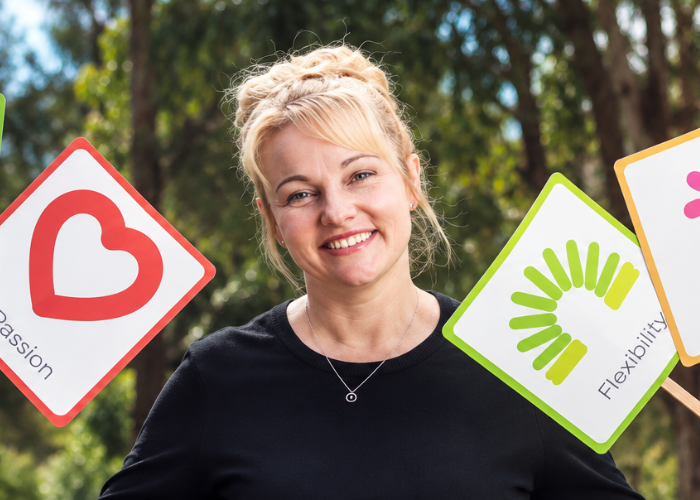
Mel Webster Unscripted: Somebody Gave Me a Chance

Oli Steven Unscripted: Finding My Pace

Adrien Koning Unscripted: Becoming the Calm in a Crisis


